
WMS API Integration: Streamlining Multi-Channel Fulfillment for 3PLs
Have you ever felt how it feels being a 3PL provider, coordinating shipments from Amazon, Shopify, eBay and your client’s site while keeping both customers and your operations happy? It seems almost like juggling plates and pedalling a unicycle at the same time. With WMS API Integration, your company’s systems make sure logistics continue to work smoothly, even with all the changes. It does far more than impress—it ensures that multi-channel fulfilment for 3PL is effective, simple and accurate. As eCommerce expands in the UK, having a strong 3PL warehouse management system that connects to your API has now become crucial.
In this blog, you’ll get an overview of the benefits of WMS API Integration and some practical guidance, and we’ll highlight relevant trends to ensure your warehouse runs smoothly. Let’s get started!
What Exactly is WMS API Integration, and Why Does It Matter?
What is WMS API Integration, anyway? Simply put, you connect your WMS software for 3PL providers to eCommerce platforms and shipping carriers with Application Programming Interfaces (APIs). Using these APIs, information about orders and stock can be easily exchanged in real-time. By integrating with their systems, 3PLs maintain both their efficiency and customer satisfaction.
Quick Snapshot: Why 3PLs Are Turning to WMS API Integration
Here’s a quick rundown of why is becoming a go-to for 3PLs:
- Instant updates: Stock levels, order statuses, and shipping details sync across platforms in real-time.
- Scalability: Adding new sales channels or clients? APIs make it a breeze without reinventing the wheel.
- Fewer errors: Automated data sharing means less manual work and fewer slip-ups.
- Happy customers: Faster, more accurate deliveries keep clients coming back.
- Lower costs: Streamlined processes save time and money on labour and resources.
These perks make WMS API Integration a vital tool for mastering multi-channel fulfillment for 3PL, helping providers stay nimble in a cutthroat industry.
The Role of APIs in Enabling Seamless 3PL Fulfillment Solutions
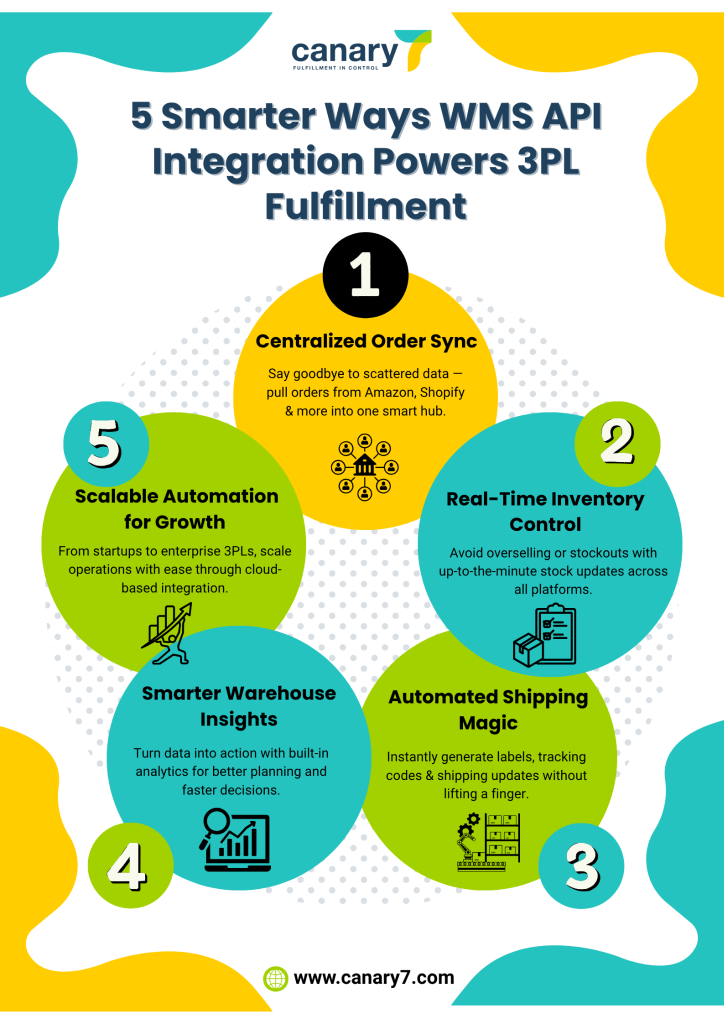
APIs are like the glue that holds a 3PL warehouse management system together. They connect your WMS to the outside world, creating a smooth flow of information for inventory management and order processing. Here’s how they make life easier:
- Order Management: APIs pull orders from multiple platforms into one system, so you’re not drowning in spreadsheets.
- Inventory Tracking: Real-time updates keep your stock control solution spot-on, avoiding overselling or stockouts.
- Shipping Made Simple: APIs link with carriers to handle labels, tracking, and delivery updates automatically.
- Smarter Decisions: Integrated systems give you data on order patterns and warehouse performance, helping you plan better.
Imagine a 3PL managing orders from Shopify, Amazon, and a client’s website. With eCommerce WMS integration, all those orders feed into one system, stock updates instantly, and shipments go out without a hitch. It’s a big part of warehouse automation for 3PLs, cutting down on manual work and speeding things up.
Is Your 3PL Warehouse Management System Falling Behind?
Not every WMS is up to the task of handling multi-channel fulfillment for 3PL. If your system feels like it’s stuck in the slow lane, it might be time to rethink things. Let’s break down the warning signs, common pain points, and why cloud-based systems are taking over.
Signs Your Current WMS Isn’t Keeping Up
- Inventory mix-ups: Manual updates or disconnected systems lead to stock errors.
- Slow order processing: Without real-time data, fulfilment drags and customers notice.
- Scaling struggles: Adding new channels or clients feels like climbing a mountain.
- No visibility: You’re flying blind without insights into warehouse or inventory trends.
- Rising costs: Manual processes and inefficiencies burn through your budget.
These red flags can make it tough to keep up with today’s fast-paced logistics demands.
Common Bottlenecks in Traditional Systems
Older WMS setups often trip over issues like:
- Manual data entry: It’s slow, error-prone, and a nightmare when handling multiple channels.
- Disconnected systems: Without integration, you’re stuck copying data between platforms.
- Sluggish performance: Legacy systems choke on high-order volumes or real-time updates.
- Lack of flexibility: Adapting to new marketplaces or tech is a headache.
These hurdles scream for a modern 3PL warehouse management system that uses WMS API Integration to keep things running smoothly.
Why Cloud-Based WMS for 3PLs Is Becoming the Standard
Cloud-based WMS software for 3PL providers is a game-changer. Unlike clunky old systems, cloud solutions offer:
- Access anywhere: Run your warehouse from any device with an internet connection.
- Real-time data: Everyone stays on the same page with up-to-date info.
- Cost savings: Skip the pricey hardware and maintenance costs.
- Easy scaling: Add new channels or clients without breaking a sweat.
Pairing cloud tech with WMS API Integration gives 3PLs the agility to handle thousands of orders an hour—perfect for the eCommerce boom. It’s no wonder cloud-based systems are becoming the go-to for modern logistics.
How WMS API Integration Boosts Warehouse Automation for 3PLs
is changing the logistics game, and APIs are the secret sauce. By linking your WMS with tools like robotic pickers, conveyor systems, or IoT sensors, APIs create a smarter, faster warehouse. Here’s how they shine:
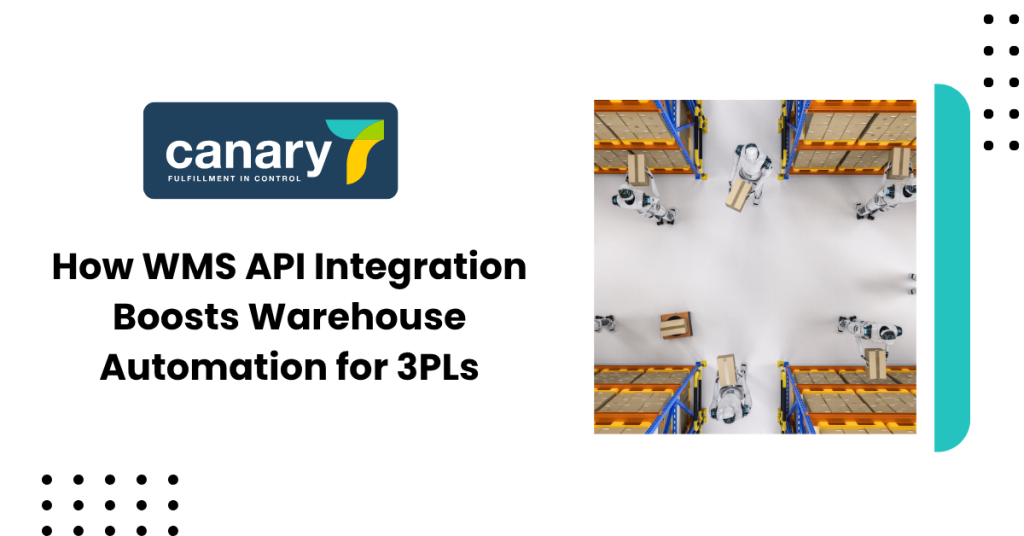
- Automated Stock Updates: APIs sync inventory with automated systems, keeping counts accurate without manual checks.
- Faster Picking and Packing: Integration with robotics or scanners speeds up order prep, saving time.
- Better Tracking: APIs connect with IoT devices to monitor stock movements, reducing losses.
- Predictive Power: Automated systems use API data to forecast demand, optimising your stock control solution.
For instance, a 3PL using a stock control solution tied to automated shelving can cut picking errors by up to 40%, based on logistics research. That kind of warehouse efficiency is crucial for nailing multi-channel fulfillment for 3PL.
Bottom Line:
In order to stay sharp in 3PL logistics, you need to embrace smart and trusted technology. With WMS API Integration, 3PLs are fully prepared to handle the challenges of multi-channel fulfillment. With 3PL warehouse management set up through APIs, you can automate your tasks, lower errors and expand as much as needed. In this context, you can explore Canary7, as both small and large 3PLs benefit from the features of a cloud-based WMS designed explicitly for the industry.
So, Ready to level up? Make use of advanced inventory management techniques and control your stock wisely to improve your warehouse and get ahead.
See Canary7 Running In Your Warehouse

A Demo Built Around Your Warehouse
.svg)
