
Warehouse Management System in Action | Top Industries Benefitting in 2025
A Warehouse management system is no longer just an operational add-on. Instead, it has evolved and positioned itself as an engine for growth. With consumer expectations skyrocketing, implementing the best Warehouse Management Software can make or break your success. Research by MarketsandMarkets indicates the global WMS market could exceed $5.72 billion by 2025, reflecting the surging demand for integrated digital inventory solutions.
In this blog, we’ll explore how different industries in 2025 are leveraging a Warehouse management system to stay competitive, boost order fulfilment, and elevate their supply chain game.
Warehouse Management System: A Quick Overview
At its core, a Warehouse management system (WMS) is a software platform that optimizes and automates warehouse tasks. By integrating functions like inventory tracking, real-time stock updates, and automated picking and packing solutions, implementing a Warehouse Management System Software paves the way for smoother daily operations. Key features include:
- Automated inventory control to reduce human errors
- Instant visibility into stock levels and shipment stages
- Seamless integration with ERP systems and eCommerce platforms
- Actionable analytics and reporting for better decision-making
These functionalities cut costs, streamline eCommerce order fulfilment, and elevate overall supply chain efficiency.
Why 2025 Is a Pivotal Year for WMS Adoption
Companies worldwide are accelerating the adoption of a Warehouse management system for several reasons:
- eCommerce Boom: Online sales show no sign of slowing, creating pressure for faster eCommerce Warehouse Management System capabilities.
- Real-Time Data: Consumers expect transparency, and businesses need immediate updates on everything from incoming orders to dispatched shipments.
- Global Supply Chain Challenges: Labor shortages and fluctuating demand mean businesses must be agile, and WMS software helps them pivot effectively.
- Digital Transformation: Organizations that delay adopting the best Warehouse Management Software risk being left behind as competitors embrace AI, IoT devices, and robotics.
Versatile Performance: How a WMS Serves a Multitude of Industries in 2025
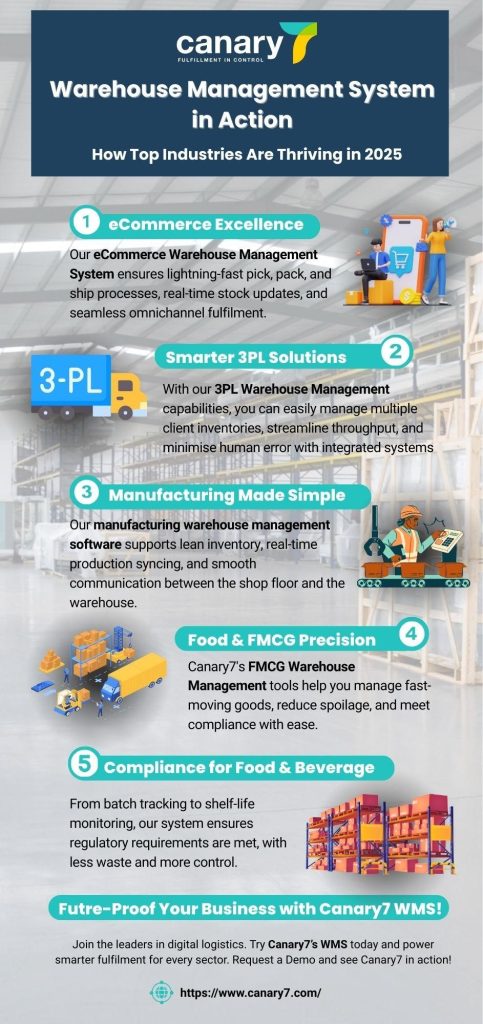
a. WMS for eCommerce and Retail Industry
- Faster Order Processing: A robust eCommerce Warehouse Management System reduces pick-pack-ship delays.
- Real-Time Inventory Tracking: Prevent overselling by synchronizing stock levels across multiple sales channels.
- Omnichannel Fulfillment: Today’s consumers shop across platforms, so businesses must adapt swiftly to meet these diverse demands.

b. WMS for Third-Party Logistics (3PL)
- 3PL Warehouse Management: It requires juggling multiple clients’ orders and stock.
- Third-Party Logistics Software: Integrations minimize errors, giving each client a transparent view of their inventory.
- Efficient Throughput: Streamlined processes from receiving to dispatch ensure minimal downtime.
c. WMS for Food & Beverage Industry
- Food and Beverage Warehouse Management: Focuses on shelf life, batch tracking, and compliance.
- Regulatory Adherence: Whether it’s temperature control or avoiding cross-contamination, a WMS helps manage critical details.
- Lower Waste: The Best Software for Food and Beverage implements smart rotation policies and digital monitoring to reduce spoilage over time.
d. WMS for Manufacturing Industry
- Manufacturing Warehouse Management Software: Bridges production cycles and storage operations.
- Lean Inventory Practices: Align manufacturing timelines with exact warehouse stock needs to reduce overproduction.
- Improved Communication: Automated alerts ensure the production floor and warehouse teams collaborate effectively.

e. WMS for FMCG Industry
- FMCG Warehouse Management: Essential for high-volume, quick-turnover products.
- Speed Is Key: Swift picking, labelling, and dispatch maintain product flow without bottlenecks.
- FMCG Supply Chain Management: A WMS integrates with distribution networks to efficiently move goods to retailers.
How to Tailor a WMS According to Your Industry Needs
1. Identify Core Requirements: Determine if perishability, regulatory compliance, or multi-client handling is your top concern.
2. Choose Flexible Integrations: The WMS should work well with your existing ERP and other vital systems.
3. Use Real-Time Analytics: Comprehensive dashboards enable quick, data-driven decisions that boost efficiency.
4. Automate Repetitive Tasks: Automation, from inventory updates to reporting, reduces manual errors.
Plan for Scalability: A Warehouse Management System Software adapts as your business and operations grow.
Conclusion | Shape Your Success in 2025 with the Canary7 WMS!
A Warehouse management system is essential for any business looking to thrive amid evolving market demands. Integrating the best Warehouse Management Software not only streamlines eCommerce order fulfilment but also elevates operations across manufacturing, Retail, 3PL, and more.
If you want a future-proof solution that can keep pace with dynamic market challenges, consider Canary7’s cutting-edge WMS. It features best-in-class solutions, including 360 cloud-based inventory management, seamless integrations, enhanced UI, and labour management.
Request a Demo today and let our platform transform your warehouse operations for tomorrow’s success.
FAQs
1. How does a WMS improve overall efficiency?
A WMS consolidates inventory data, automates tasks like picking and packing, and offers real-time insights that help reduce errors and improve turnaround times.
2. Is a Warehouse Management System suitable for small businesses?
Yes. A Warehouse Management System Software can scale up or down, making it a cost-effective solution for both startups and larger enterprises.
3. How can a WMS help with regulatory compliance in industries like food and pharmaceuticals?
By monitoring expiration dates, batch numbers, and product temperatures, a Warehouse management system ensures businesses meet essential safety standards and industry regulations.
See Canary7 Running In Your Warehouse

A Demo Built Around Your Warehouse
.svg)
